Verifying Air Barrier Performance for a New Military Facility
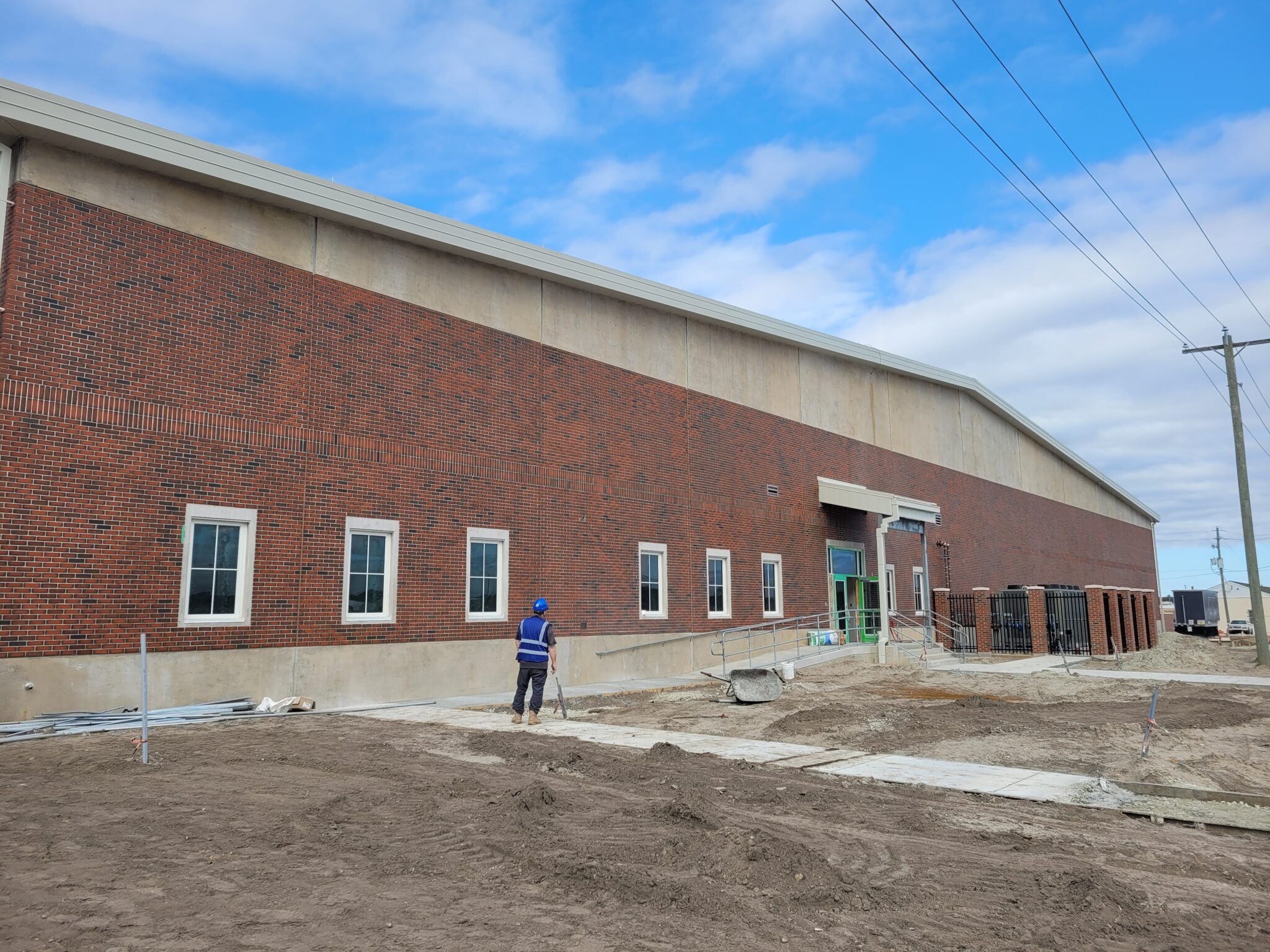
Technical Assurance was engaged by W.M. Jordan Company to provide building enclosure commissioning services for the P1527 LOGCOM Warehouse at Marine Corps Base Camp Lejeune. The new facility was nearing completion when Technical Assurance performed third-party functional testing of the building’s air barrier assembly.
The facility includes a concrete slab-on-grade, insulated precast concrete wall panels, and a steel roof deck. The low-slope roof consists of standing-seam metal panels with drainage to gutters at the eaves.
Testing Whole-Building Airtightness
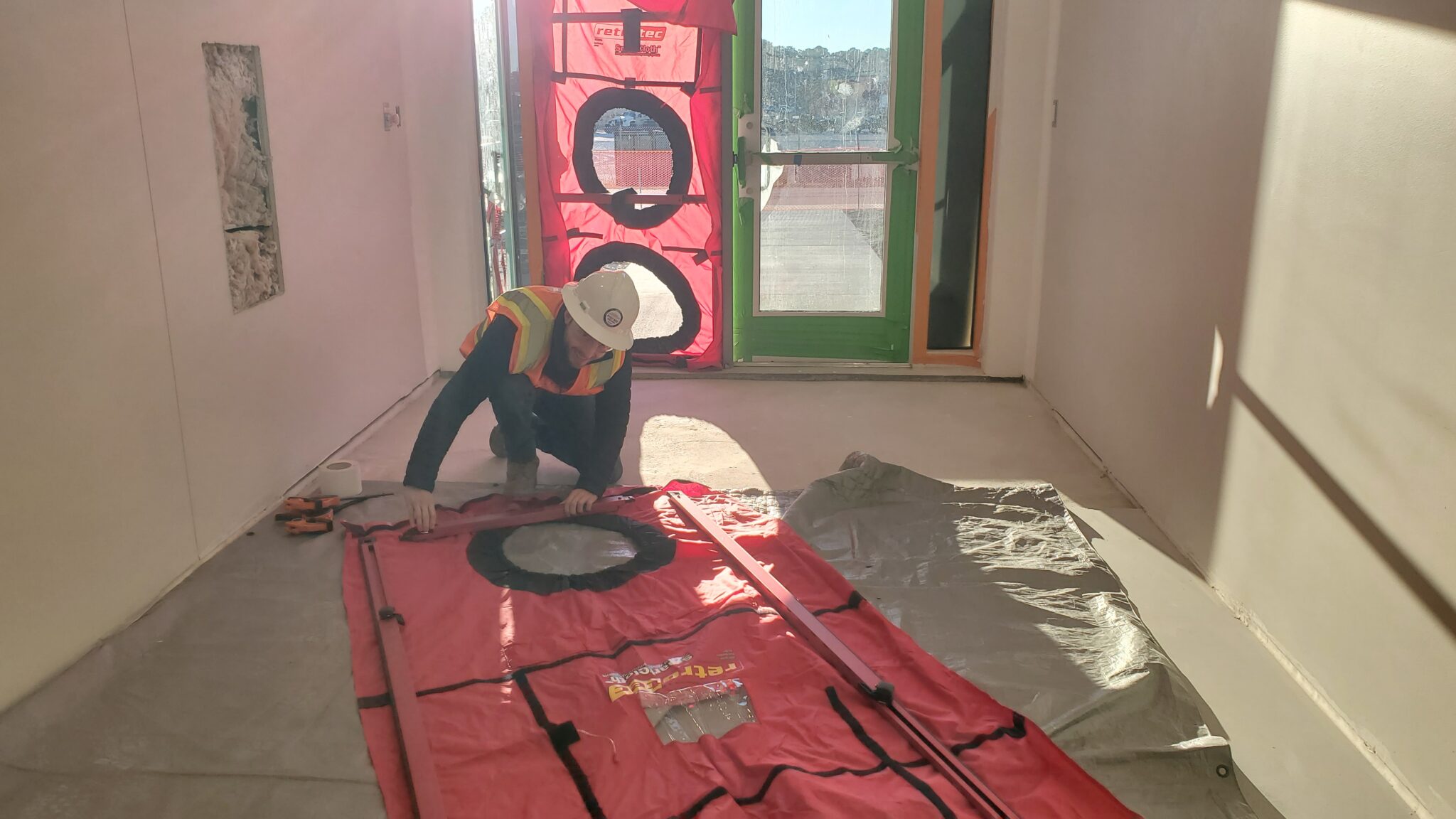
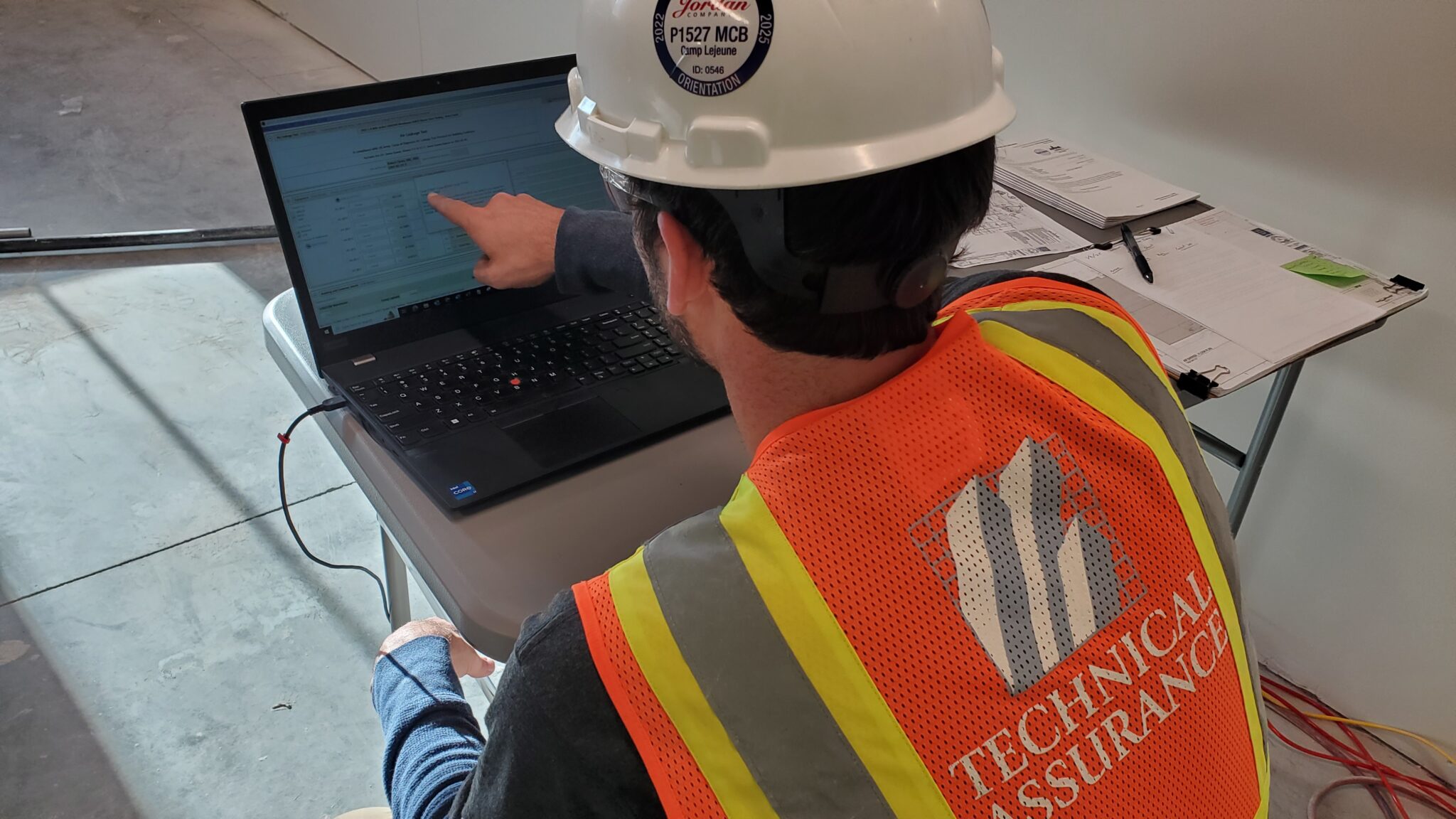
Technical Assurance performed positive and negative whole-building pressurization testing to evaluate airtightness and identify potential air infiltration through the building enclosure. Testing was completed both with and without the HVAC equipment included.
The building passed the pressure testing and met the requirements established by both the Owner’s Project Requirements and United States Army Corps of Engineers standards. Testing followed ASTM E779 and ASTM E1186 requirements for blower door and air barrier leakage testing.
Using Infrared Scanning to Identify Thermal Deficiencies
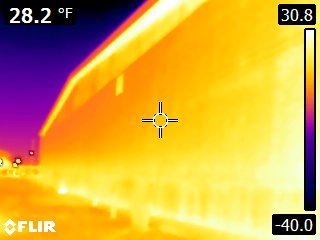
Technical Assurance also performed infrared scanning of the roof and exterior walls. The survey evaluated the enclosure for thermal deficiencies associated with air leakage, thermal bridging, and missing insulation. Testing followed ASTM C1153 for roof infrared scanning and ASTM C1060 for exterior wall infrared scanning.
The infrared survey identified air leakage at several unsealed or poorly sealed roof and wall penetrations and at entry doors. Air leakage was also observed at the facility’s overhead coiling doors.
Turning Performance Testing Into Corrective Action
Based on the testing results, Technical Assurance recommended air sealing accessible leakage locations and adjusting exterior doors to improve airtightness. W.M. Jordan Company, serving as the project’s general contractor, coordinated the resulting corrective work with the appropriate trades.
The combination of whole-building pressurization testing and infrared evaluation provided independent verification of overall air barrier performance while identifying localized conditions requiring correction before project completion.