

Building Enclosure Commissioning (BECx) provides data-driven, quality improvement suggestions to new construction building design, observation during construction and performance testing, ensuring the Owner’s Project Requirements (OPR) are met and exceeded. In its basest form, BECx is meant to set the project’s outcomes with a heavy focus on quality assurance and excellence in enclosure performance.
This building enclosure commissioning process is led by a dedicated Building Enclosure Commissioning Authority (BECxA) who works alongside the project team to verify performance from design through occupancy.
Why Building Enclosure Commissioning Matters
Architectural and product innovation have added significant complexity to the typical enclosure elements, resulting in higher costs and risk. Enclosure systems can represent a sizeable portion of construction cost (sometimes up to 20%), and their failure, commonly in the form of water intrusion, has been found to result in the largest share of insurance claims in the industry.
Consequences of Water and Air Intrusion
Uncontrolled water and air penetration leads to:
- Building leaks
- Mold
- Poor indoor air quality
- Energy loss
- High cost of ownership
- Litigation
Common Causes of Building Enclosure Failures
The cause of water intrusion into a structure is commonly a result of flaws found in the design, construction and occupancy of new buildings. Specifically, this includes:
- Non-continuous barrier design
- Inadequate detailing of terminations and transitions between roofs, wall systems and below-grade waterproofing
- Inadequate project planning & sequencing of construction
- Coordination of multiple trade contractors
- Inadequate shop drawing and submittal review
- Insufficient supervision to manage the process
- Improperly assigned trade responsibility
- Insufficient quality control processes
- Inadequate mock-up evaluations
- Lack of consistent and qualified building exterior maintenance program for the roofs and exterior wall systems
It has been said that as much as 90% of all water intrusion problems occur within 1% of the total building exterior surface area. The performance of the building envelope and mitigating the risk of water infiltration has become more important than ever and must be carefully considered at all stages of a project. To this end, building enclosure commissioning is a comprehensive quality process that begins with design and continues into operations.
The Building Enclosure Commissioning (BECx) Process
BECx is structured around ASHRAE and ASTEM guidelines to ensure that the performance of facilities, systems and assemblies meet the client’s defined objectives and criteria.
The building enclosure commissioning process follows a structured, multi-phase approach to verify performance and reduce operational risk throughout the project lifecycle.
Step 1: Pre Design
It is recommended to engage a BECx consultant starting with Pre-Design. This allows the BECxA (agent/consultant) to be critically involved in the design process and maximize the cost benefits through the development of the Owner Performance Requirements (OPR) and Basis of Design (BOD). This is also the best time for the consultant and Owner to identify the scope and budget for the commissioning process.
Step 2: Design Review
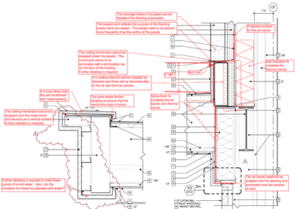
Shortly thereafter, the Design Review stage involves the Owner presenting the BECxA with documents, drawings and specifications. The primary focus of the BECx is to ensure that the building enclosure is designed as a cohesive unit in which the individual systems and components tie in and transition into one another in a completely waterproof detail. In our experience, often there are no design details defining the requirements for “continuous” weather and air barriers. This is non-functional for a building.
The design review step is critical to the success of new projects because it helps identify challenging problems prior to construction and affords the team the opportunity to resolve these concerns before financial and time constraints start to squeeze. The team looks for potential issues such as:
- Bulk Water Management
- Capillary Breaks
- Continuous Air Barriers
- Continuous Thermal Barriers
- Vapor Drive
- Other Potential Points of Failure
Step 3: Pre-Construction
Pre-Construction BECx services are all about checks and balances to ensure that everyone involved in the construction phase of a project is on the same page to meet the OPR, building envelope trade coordination is finalized and the on-site quality control parameters are clearly defined. This step frequently involves mock-up submittal review and mock-up testing to help identify flaws in design, sequencing, materials, etc. before it is reproduced on the building itself.
The project submittal review is performed to verify that:
- Products are to specification
- Products will be installed properly and per the design
- Products meet the performance criteria
- Products can be installed as required by the manufacturer
Need guidance during your project?
Technical Assurance acts as your building enclosure authority—helping coordinate teams, reduce operational risk, and protect long-term performance.
Step 4: Construction
During the Construction phase, the BECxA provides quality observation to ensure the proper installation of products and materials. Human error is a leading cause of building enclosure failures. Observations and reports create a step-by-step installation procedure to enhance the quality of craftsmanship.
Step 5: Performance Testing
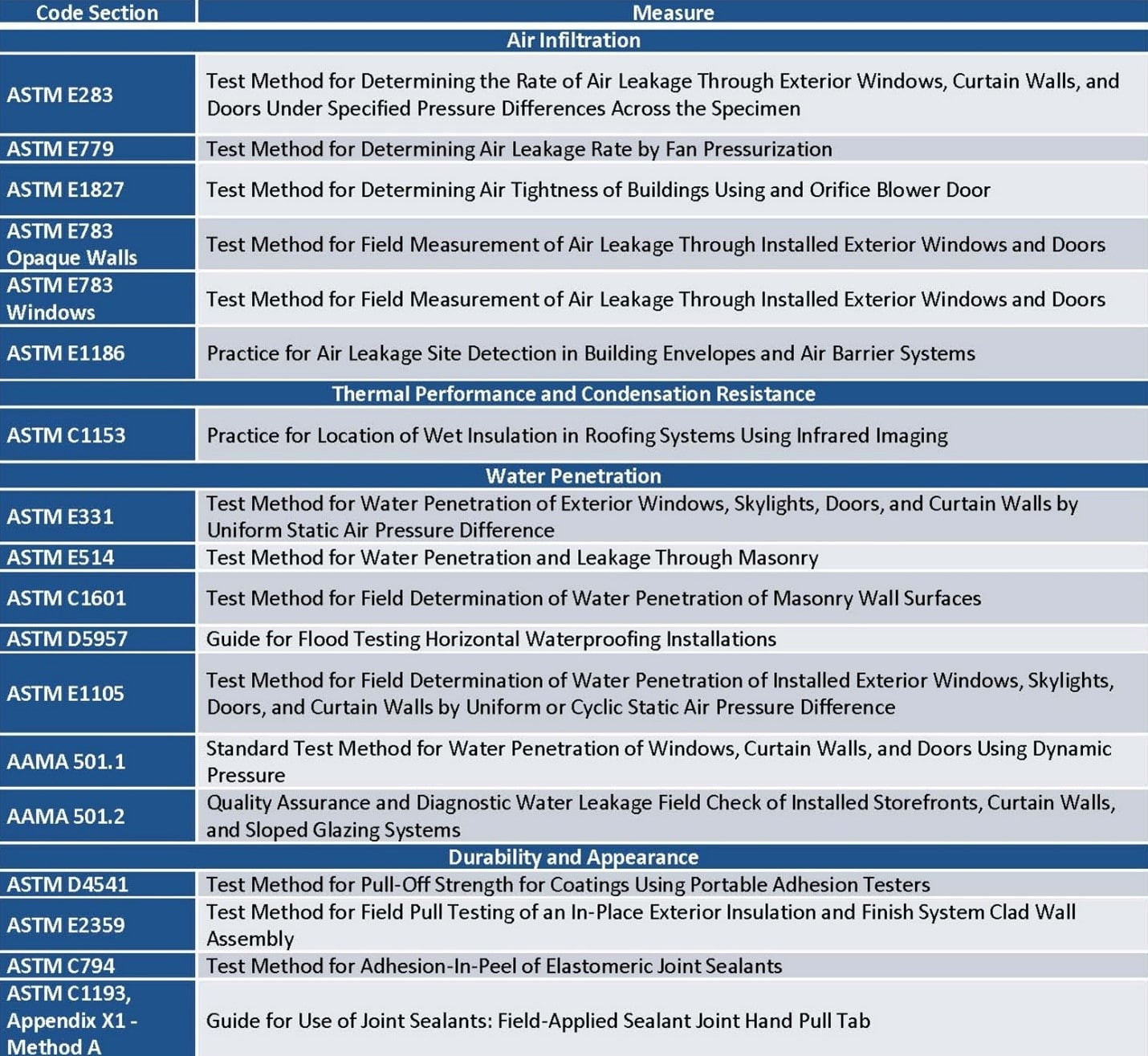
Engaging a BECxA to perform various tests during construction helps verify that the building enclosure adequately performs, and these assessments identify any potential sources for leaks. By determining the source of the errors, the mistake can be corrected, mitigating liability. Technical Assurance’s BECx Team performs the following tests:
Step 6: Occupancy and Operations / Close Out
After construction ends, the occupancy and operations phase of a building life cycle is where an Owner’s proactive approach to maintenance and ongoing performance optimization can reap significant cost of ownership savings. The last step of the BECx process is intended to set the Owner up for success throughout the entire life cycle of the building. This phase includes the review of manuals, manufacturer’s conformance records and functional test records. All reports, drawings and other documents are submitted along with an exterior envelope preventative maintenance program for the Owner going forward.
At a Glance: The 6 Phases of Building Enclosure Commissioning
- Pre-Design
- Design Review
- Pre-Construction
- Construction Observation
- Performance Testing
- Occupancy & Operations
Benefits of Building Enclosure Commissioning
While adding slightly more upfront costs to the project, The National Institute of Building Science indicates savings can be achieved during the first year after occupancy via a significant reduction in first year call backs and fine tuning.
Since potential air and water infiltration areas of concern have been addressed, obvious benefits include improved building operation and maintenance with lowered operations costs.
- Reduced Operational Risk and Liability
- Lower Long-Term Maintenance Costs
- Improved Building Performance
- Enhanced Occupant and Owner Satisfaction
Building enclosure commissioning can improve owner confidence, occupant comfort, and long-term system performance. By identifying issues early, teams can address deficiencies before they lead to costly repairs, operational disruptions, or premature system failure. At closeout, a building envelope maintenance checklist can also support ongoing evaluations and help preserve performance over time.
LEED Certification
Beyond building performance and cost of ownership savings, achieving LEED certification is another sustainability benefit to incorporating BECx into a construction project.
LEED v4 is the newest version providing more flexibility for individual projects, a performance-based approach to the design, and an expanded focus on materials, looking at the total amount and impact on human health. Reference guides for the newest updates to LEED v4 are available on the USGBC website.
There are two types of BECx commissioning for LEED consideration: Fundamental and Enhanced. To be LEED certified, all projects must engage fundamental commissioning, but a major differentiator between this requirement and enhanced commissioning is the latter requires a design review by the independent third-party CxA. Fundamental commissioning is just engagement during the Design phase, a review of one design and mock-ups of the first field installation. However, the more that an Owner invests in BECx services increases the likelihood of achieving a higher LEED score and certification.
BECx experts have the technical knowledge and testing capabilities to maximize the points awarded toward LEED. According to Evan Mills, PhD, a researcher at Lawrence Berkely National Laboratory, BECx should be viewed as “the single-most cost-effective strategy for reducing energy, costs and greenhouse gas emissions in buildings today.” Information about Mills’ study can be found here.
The Risk Is NOT Worth It
The possibility of envelope failure can have a drastic negative impact on the Owner’s operations and occupants. The risk of not having a BECx process can lead to expensive and litigious consequences. Errors in design and construction can compromise the structure of the building and/or render a space unusable. Equipment and property are at risk of damage as a result of penetrating air and water along with any thermal malfunctions.
Life, safety and health problems can be introduced resulting in legal action and ultimately extra costs. A cautionary tale – Technical Assurance was engaged during the design phase of a $100 million dollar condominium project. The Owner did not proceed with BECx services moving into pre-construction or any following project phases, including no performance tests. They saved money initially, but when a window system failure led to litigation, the Owner had to pay an additional $20 million to properly remediate the error!
Building enclosure commissioning is more than just another expense. It is the quality assurance for building envelope construction. The dividends and savings of investing in a building envelope’s success will result in more money for the Owner and a longer lifetime for the building enclosure.
Optimize Your Building Enclosure With Confidence
Whether you’re planning a new project or looking to reduce operational risk in an active build, Technical Assurance provides building enclosure commissioning services tailored to your goals.
Talk with our team to get clear next steps—no pressure.
Frequently Asked Questions About BECx
What is building enclosure commissioning (BECx)?
Building enclosure commissioning is a quality assurance process that verifies the performance of a building’s exterior systems, from design through construction and occupancy.
What does a building enclosure authority (BECxA) do?
The building enclosure authority coordinates design review, construction observation, and testing to ensure the enclosure meets performance expectations.
When should building enclosure commissioning start?
As early as possible. Building enclosure commissioning is most effective when it begins during pre-design or early design phases. Early involvement allows the commissioning team to review project goals, enclosure performance requirements, and design details before construction documents are finalized, helping reduce operational risk, improve constructability, and minimize costly changes during construction.
Is building enclosure commissioning required for LEED certification?
Building enclosure commissioning is not required for all LEED projects; however, LEED includes credits related to enhanced building enclosure commissioning that can contribute toward certification goals. Even when LEED certification is not being pursued, BECx can help verify enclosure performance and support long-term building durability.
What is included in a building envelope maintenance checklist?
A building envelope maintenance checklist typically outlines evaluation schedules, areas of the enclosure that require routine observation, and recommended maintenance to help preserve performance and extend service life.